Our approach
How we work, from farm to phin
Good coffee is decided long before the roast. Here is everything that happens to a bean before it reaches you.
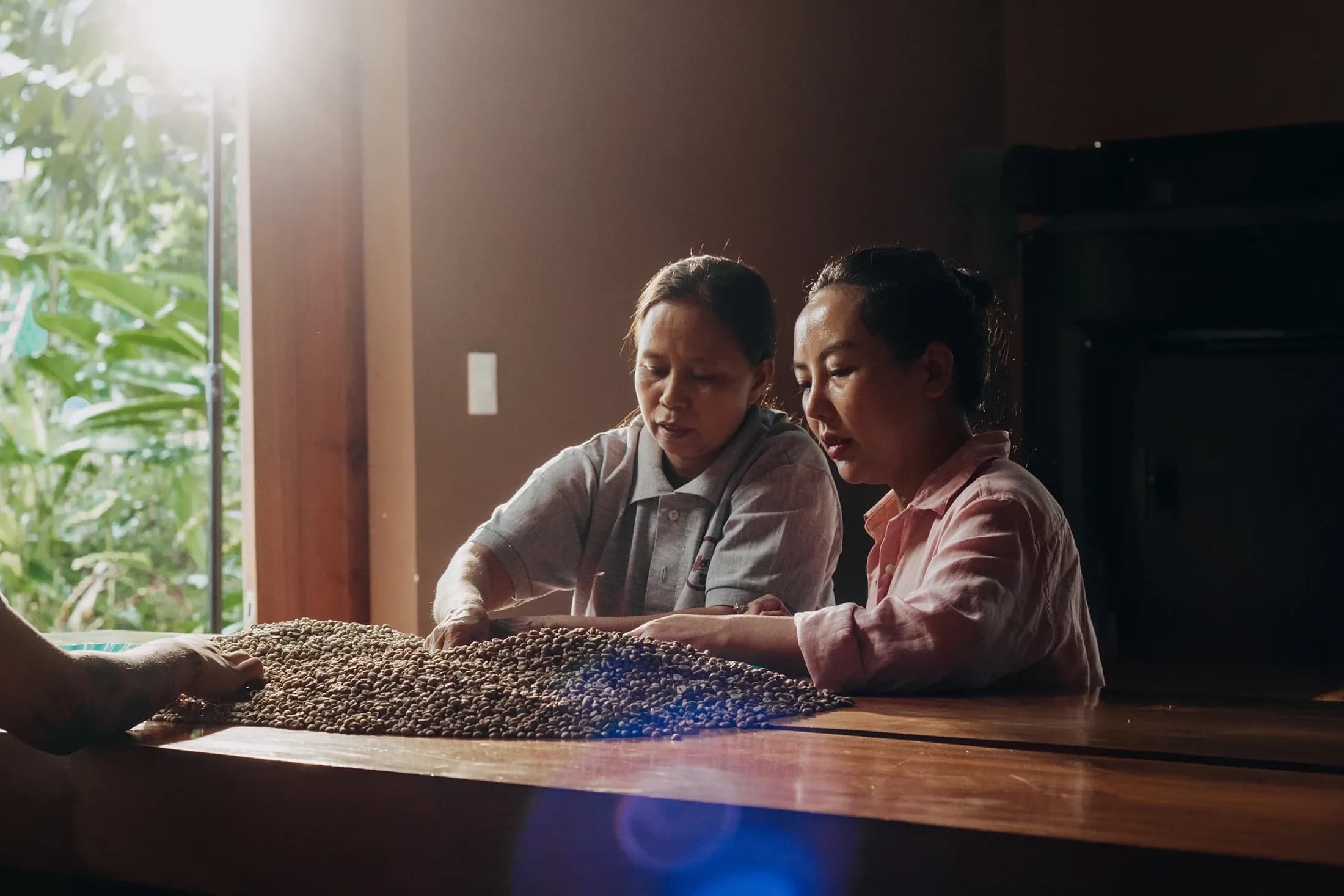
Where it grows: the Central Highlands
Robusta · 500–800 m
Đắk Lắk
Red basalt soil around Buôn Ma Thuột, Vietnam's coffee capital. Warm, with a long dry season for sun-drying.
Our coffees from here: Buôn Ma Thuột Robusta, Sài Gòn Morning
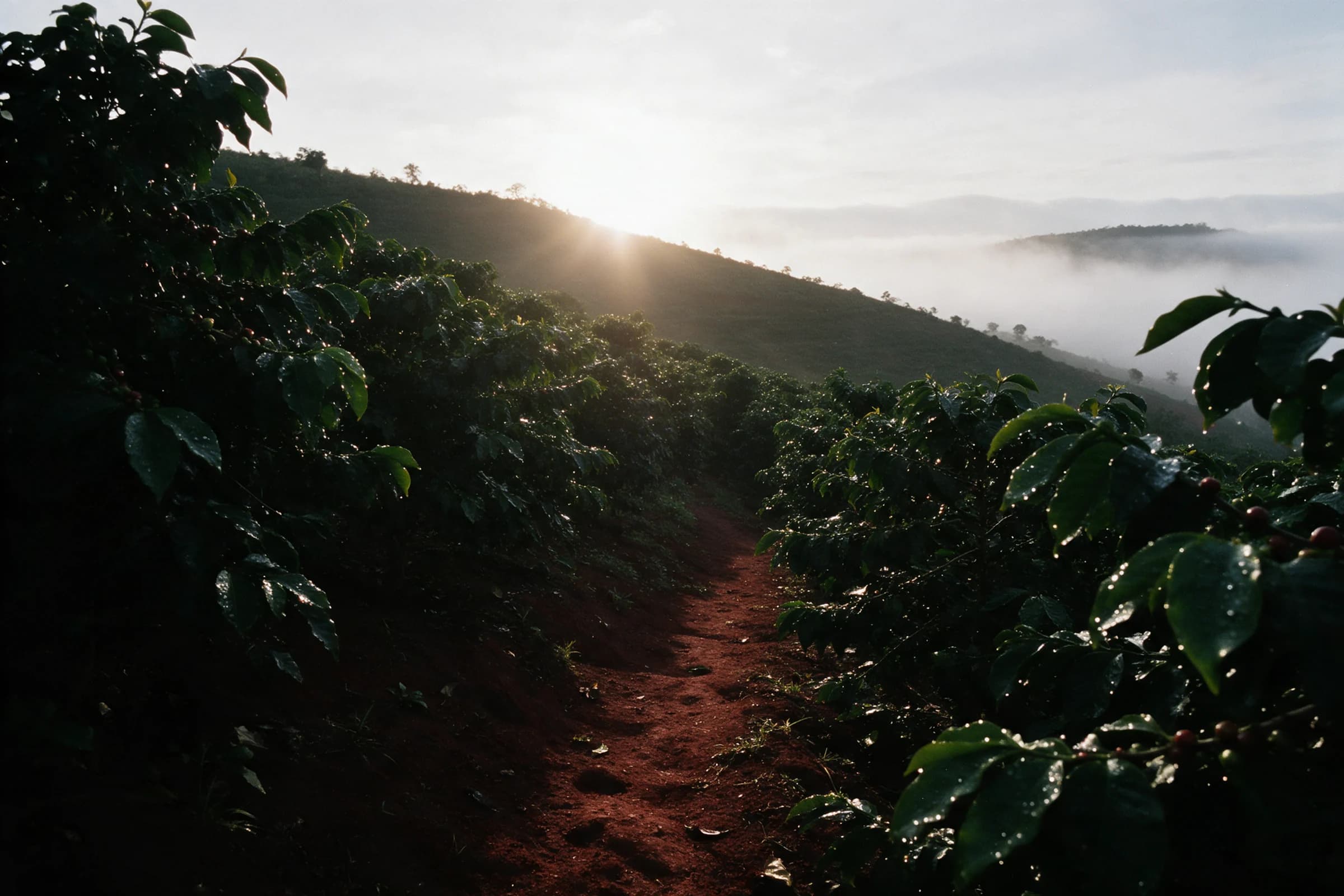
Arabica · 1,500–1,650 m
Lâm Đồng
Cool hills around Đà Lạt and Cầu Đất, where arabica ripens slowly and sweetly. The arabica in our blend comes from here.
Our coffees from here: Sài Gòn Morning
The bean's journey
Eight steps from a red cherry in Đắk Lắk to the drip in your kitchen. Scroll to follow one bean all the way.

95 °C · 4–5 minutes
Your phin
The last step is yours. Twenty grams of coffee, a splash of water to bloom, then a slow drip onto condensed milk or straight into the cup. Pour it over ice and it's cà phê sữa đá.
Nov – Jan
Picked ripe
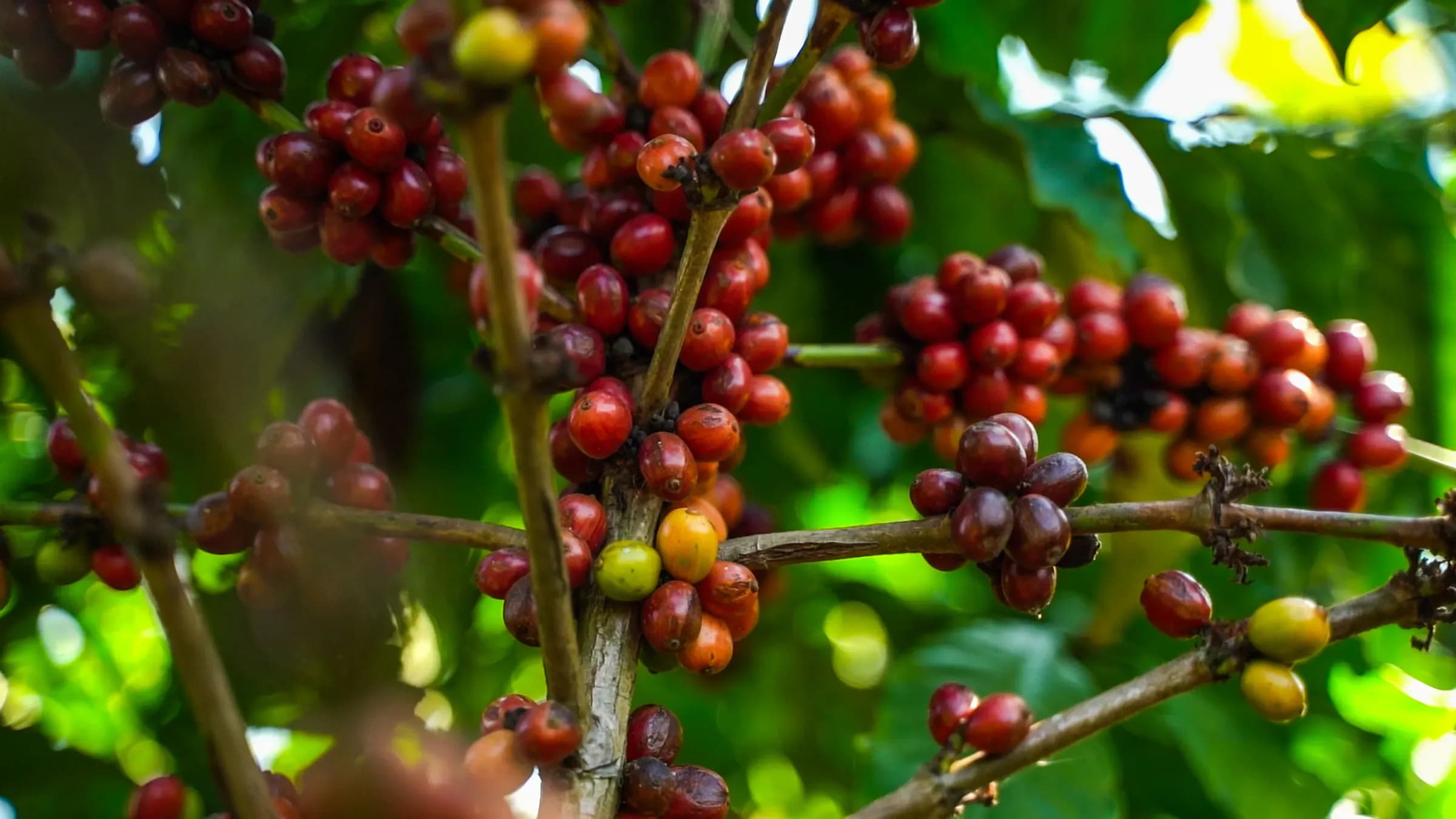
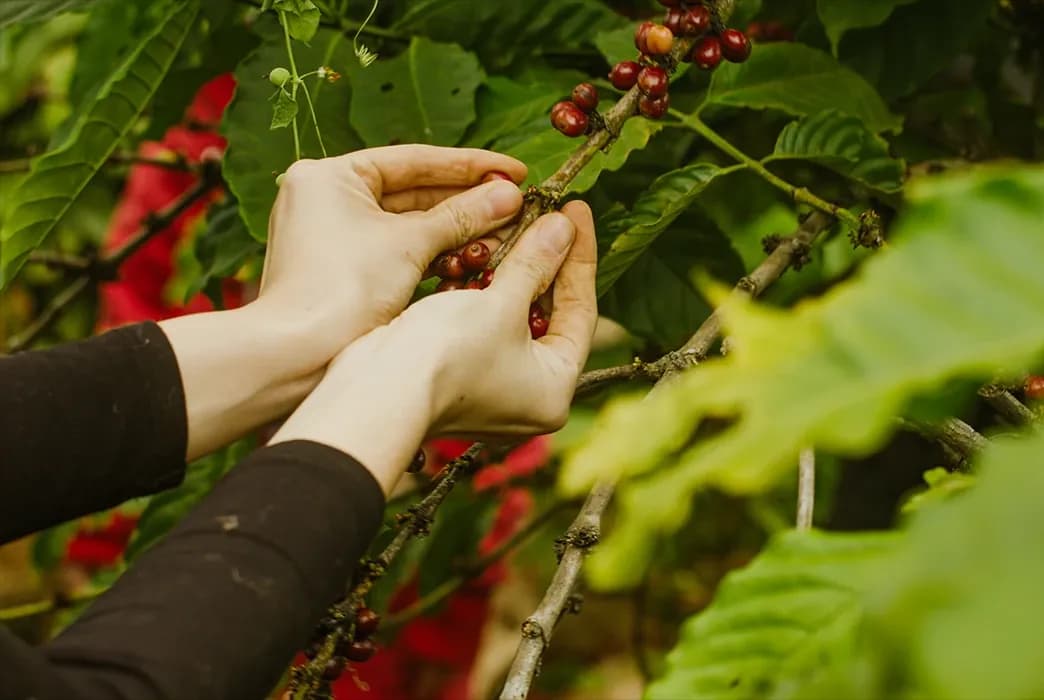
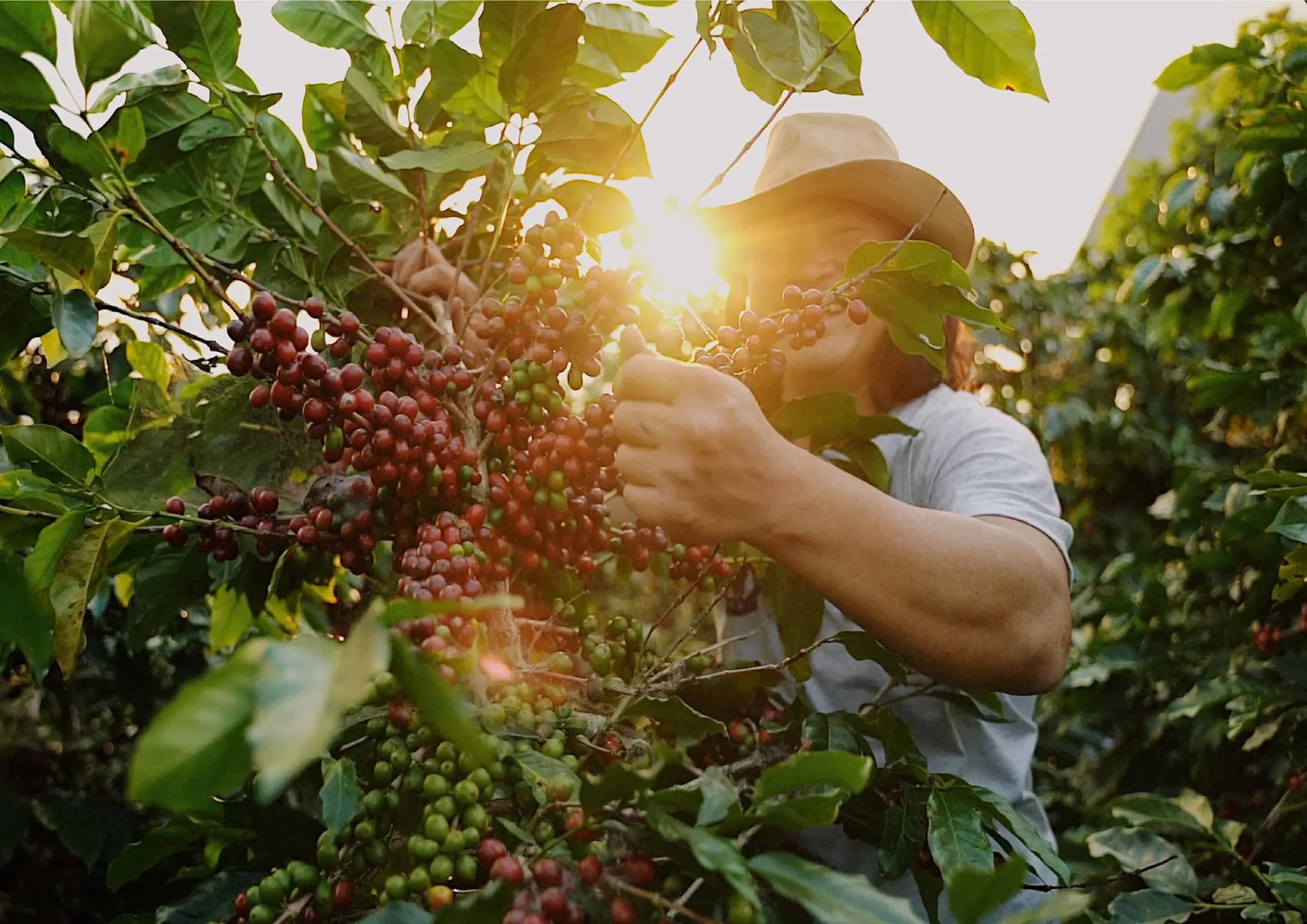
Robusta in Đắk Lắk ripens from November. Pickers go over each tree several times and take only the red cherries, because an unripe cherry tastes green and sour however well it is roasted. It is slow, careful work, and the first thing we agree on with every farm.
Natural · honey · washed
Processing
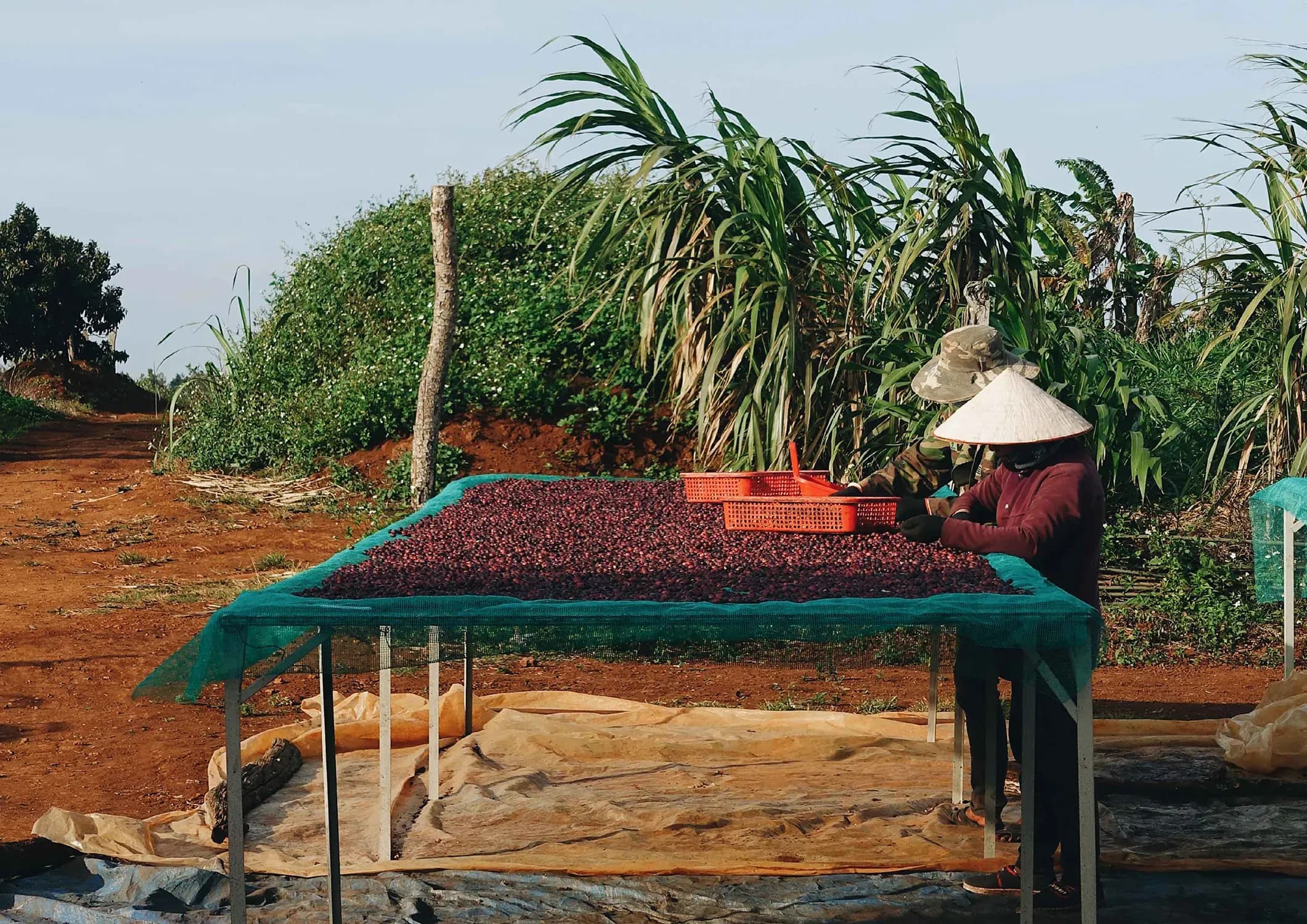
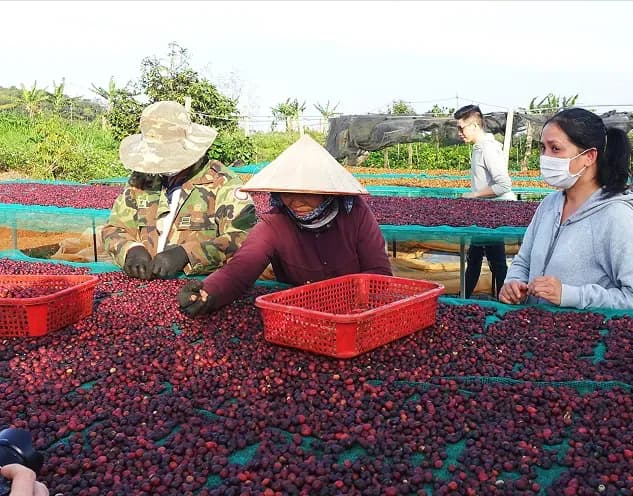
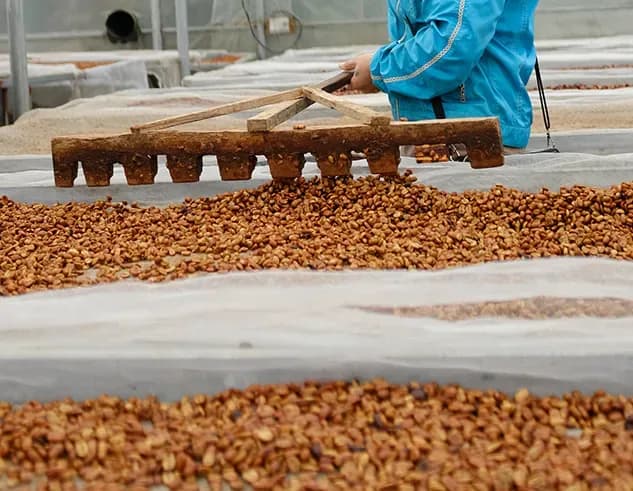
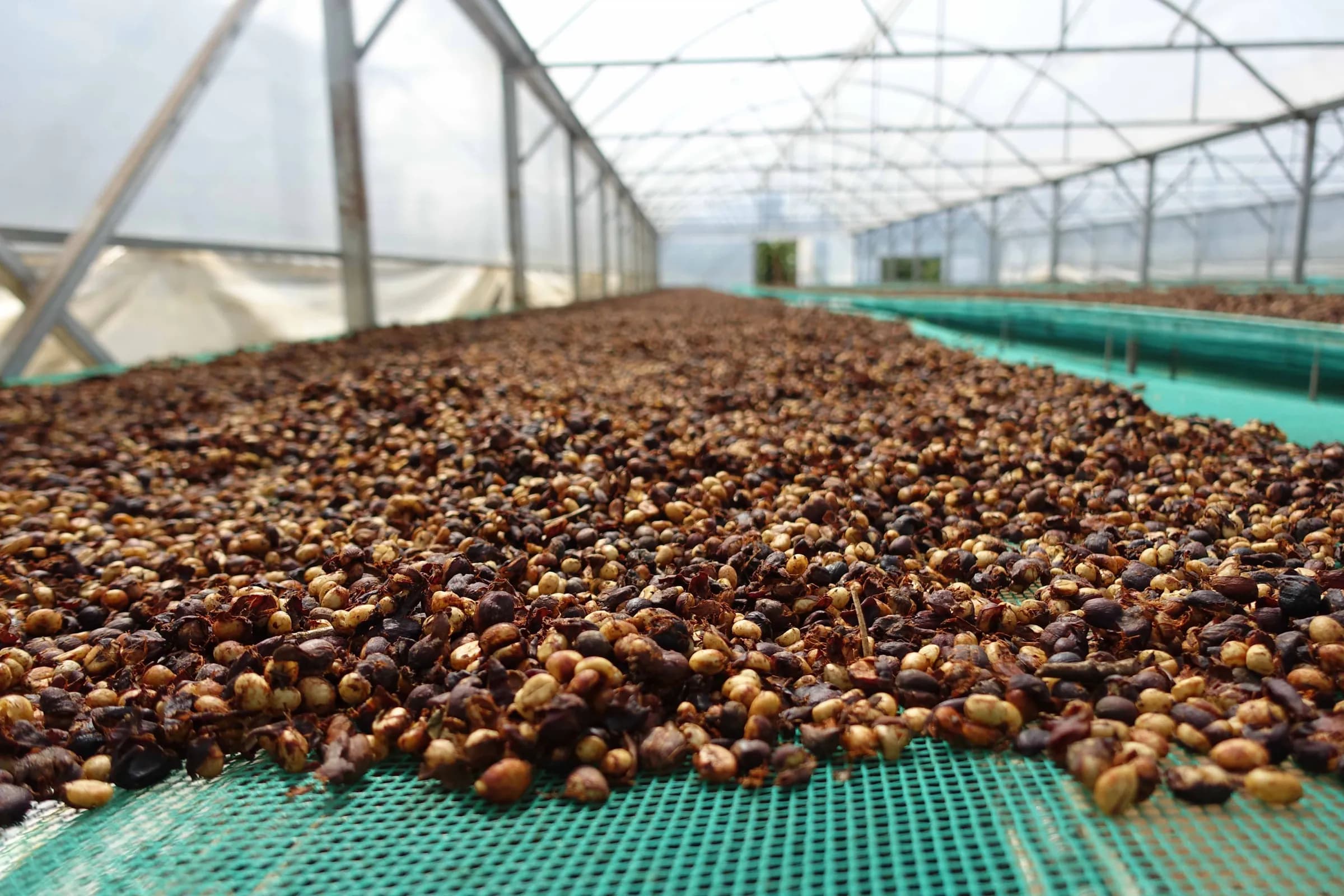
Most of our robusta is dried whole in the sun (natural). For some lots the fruit is pulped off and the beans dried with a sticky layer left on (honey), and our arabica is pulped, fermented and washed clean before drying. Each method changes the sweetness and body in the cup.
10–12 % moisture
Drying and hulling
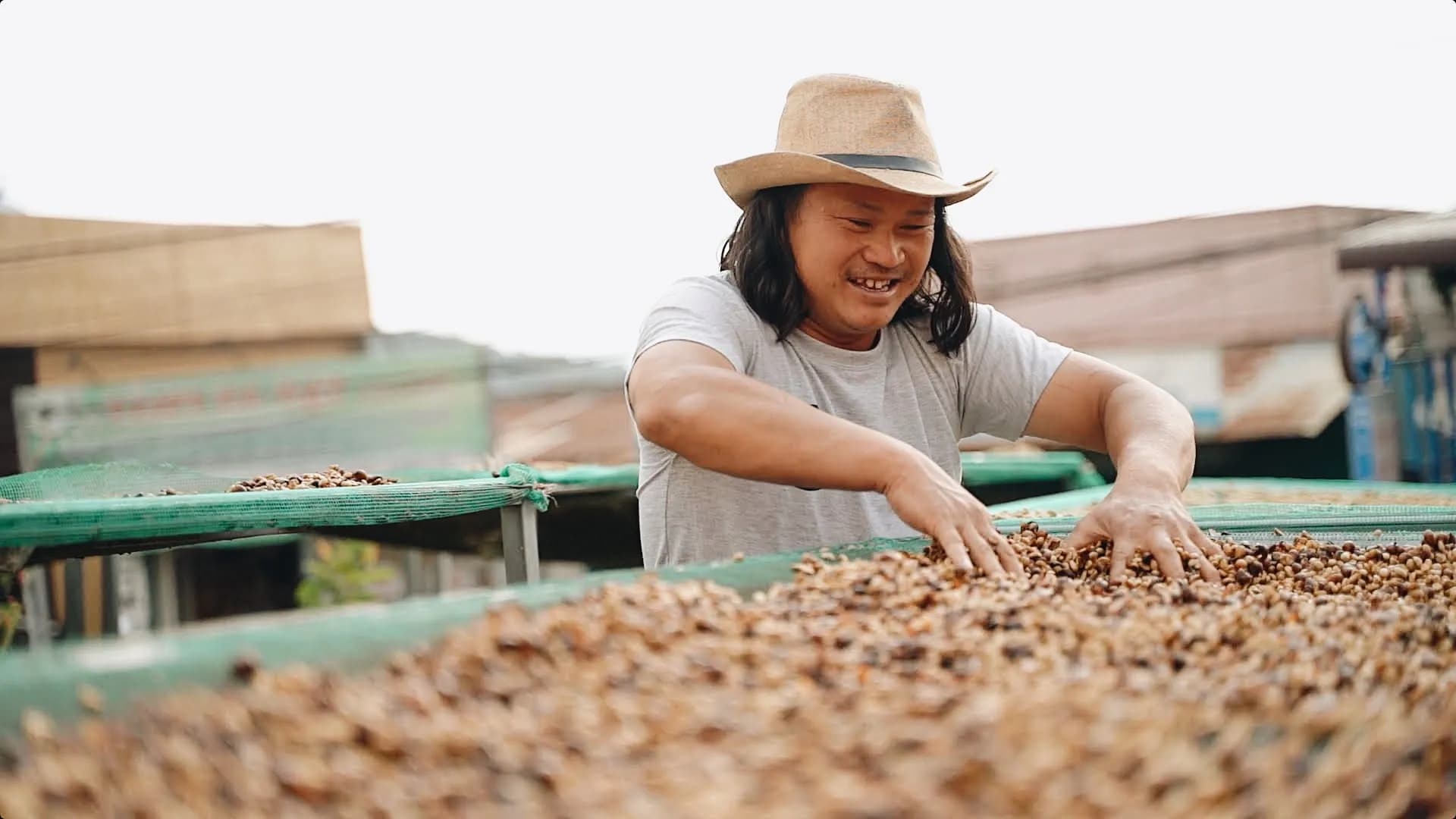
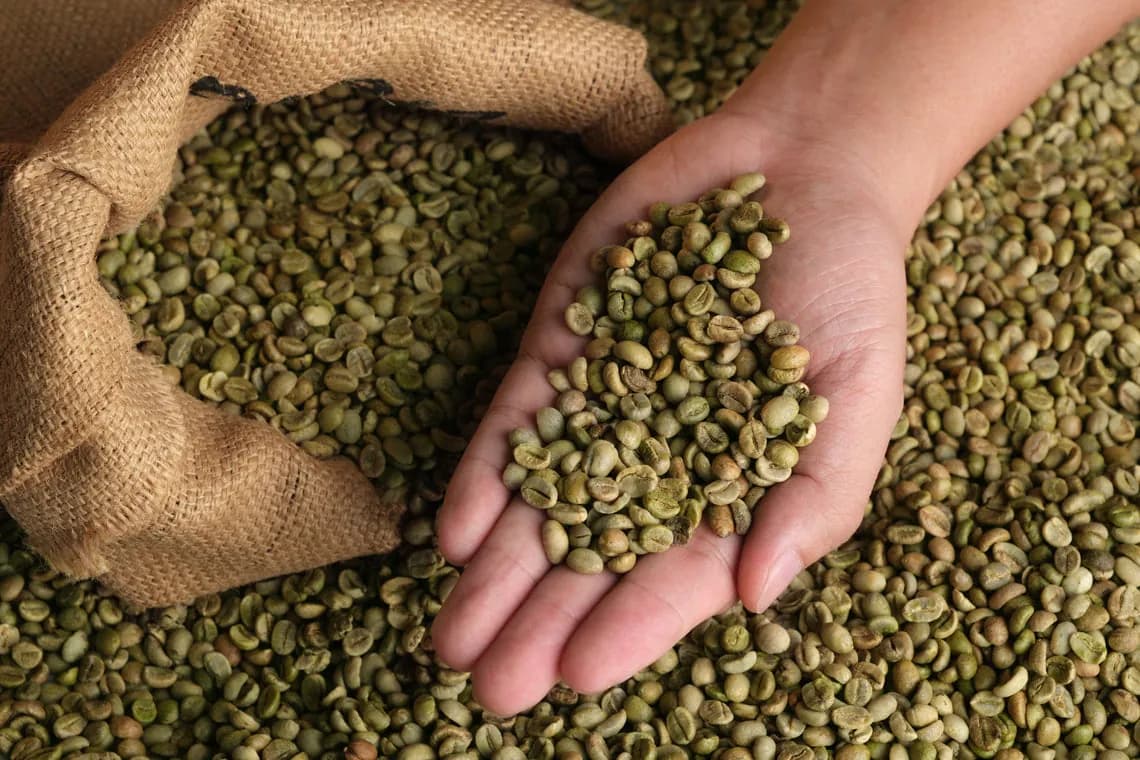
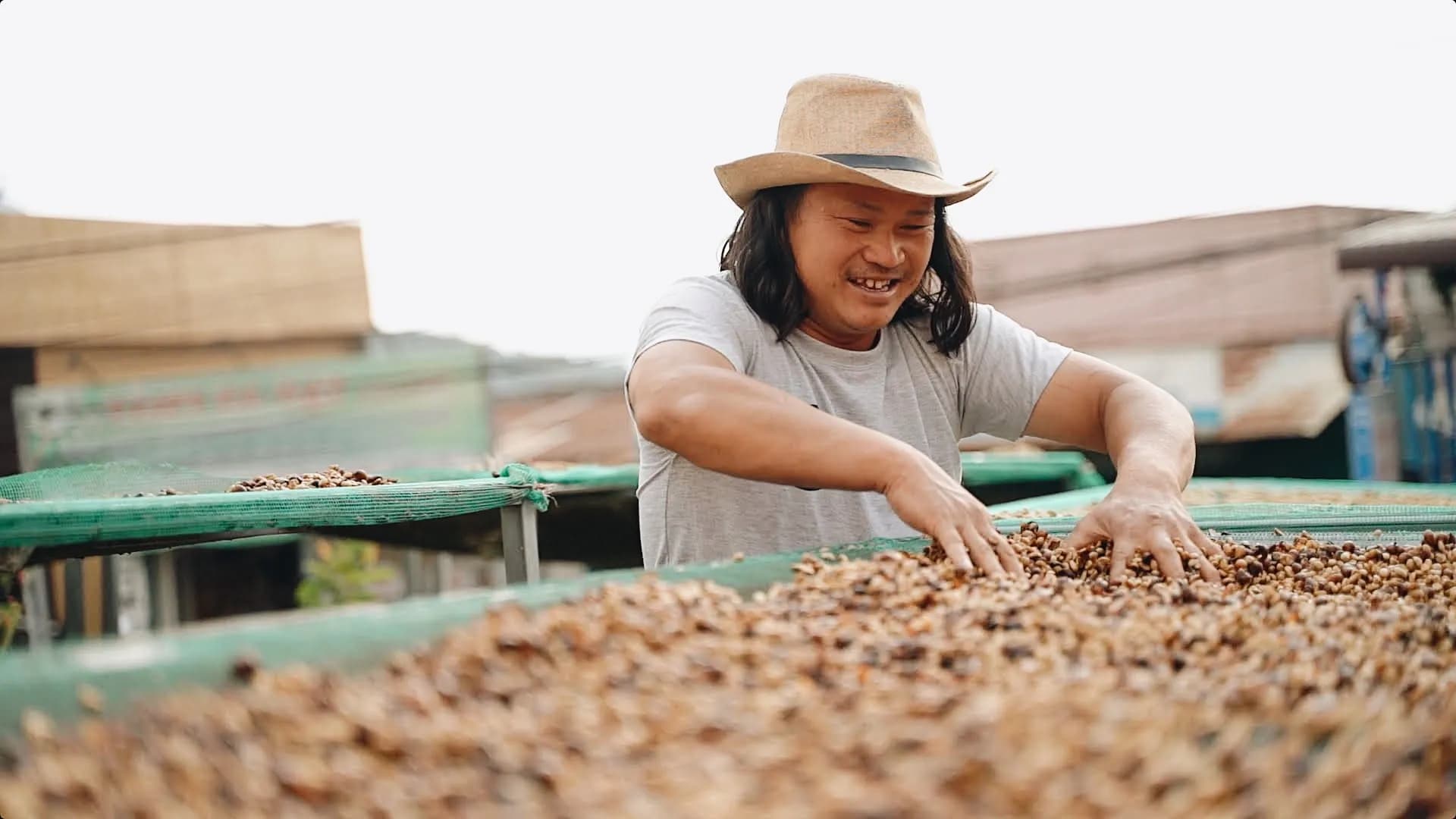
The beans dry for two to four weeks on raised beds and patios, turned several times a day so they dry evenly. When the moisture is down to 10–12 %, the dried husk is milled off to leave green coffee, stable enough to store and ship.
Screen 16 and up
Sorting and grading
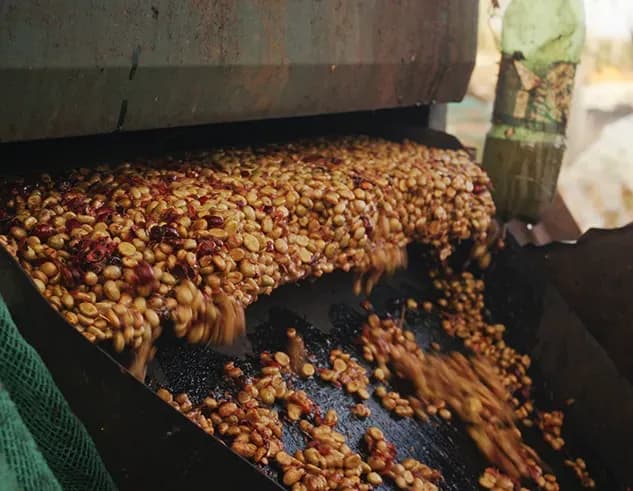
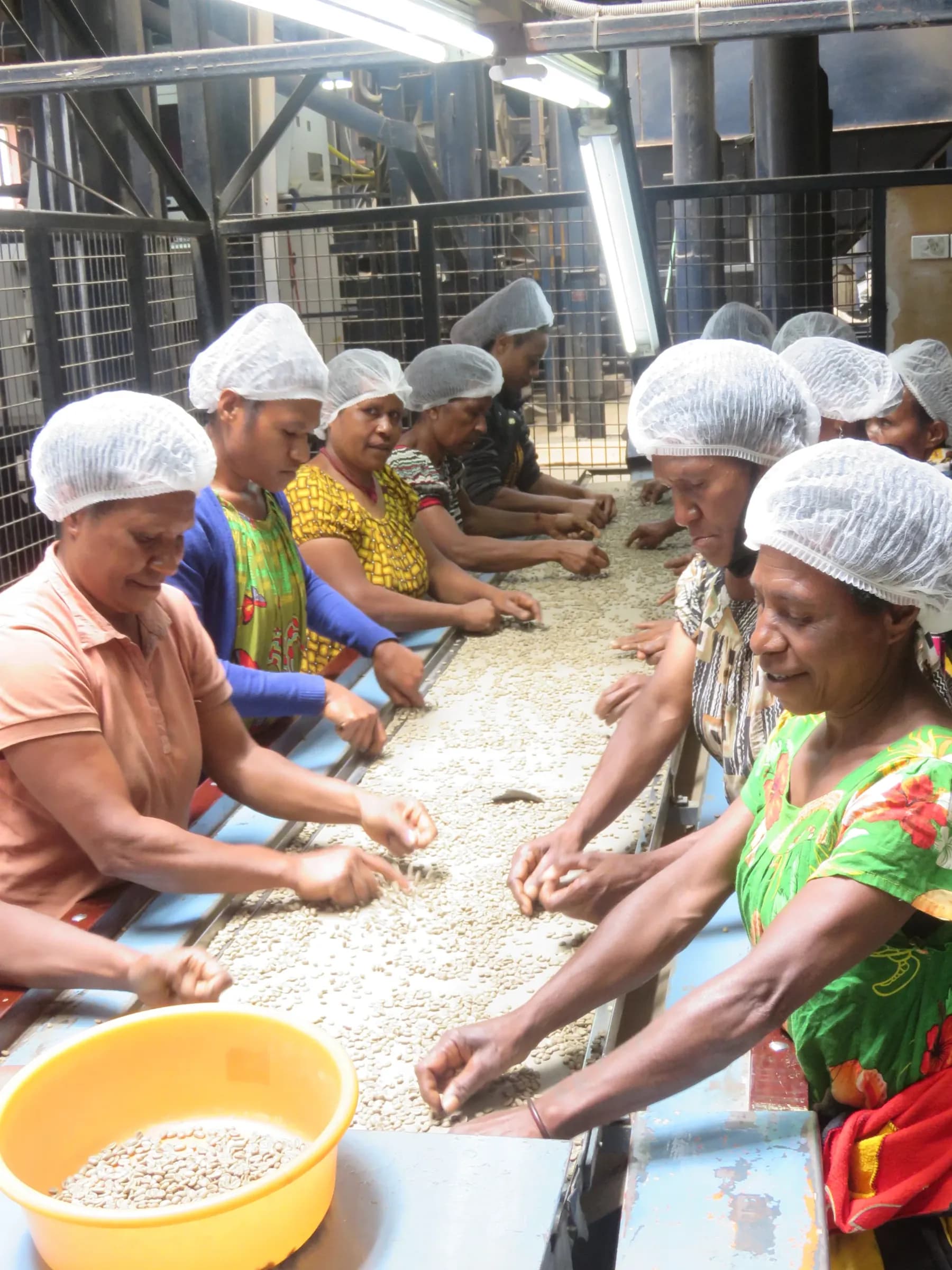
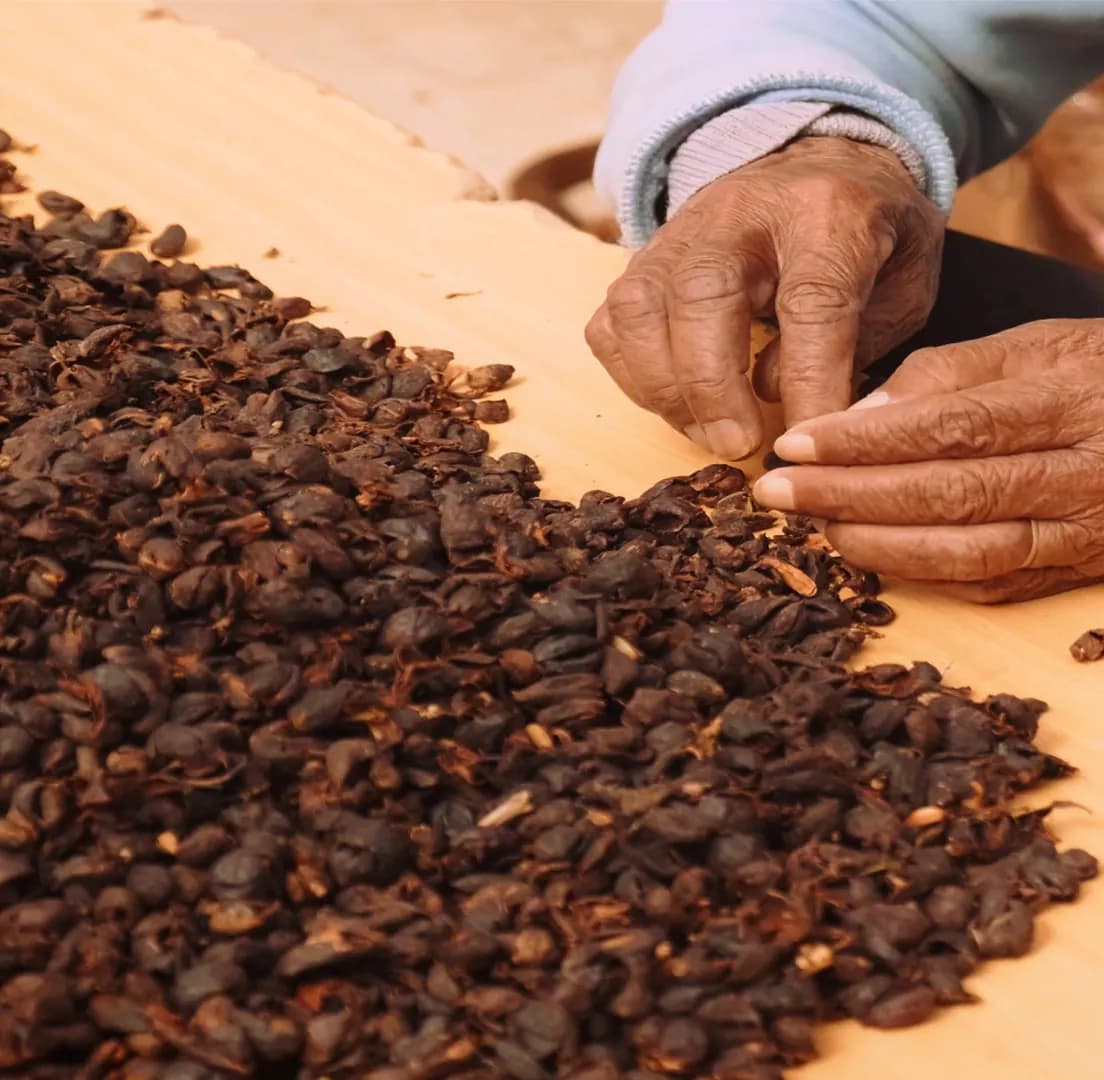
Green beans are sized through screens, then machines and hands pick out broken, black and insect-damaged beans. We buy the larger, cleaner grades, so every bag roasts evenly.
Up to about 225 °C
Roasted in Vietnam
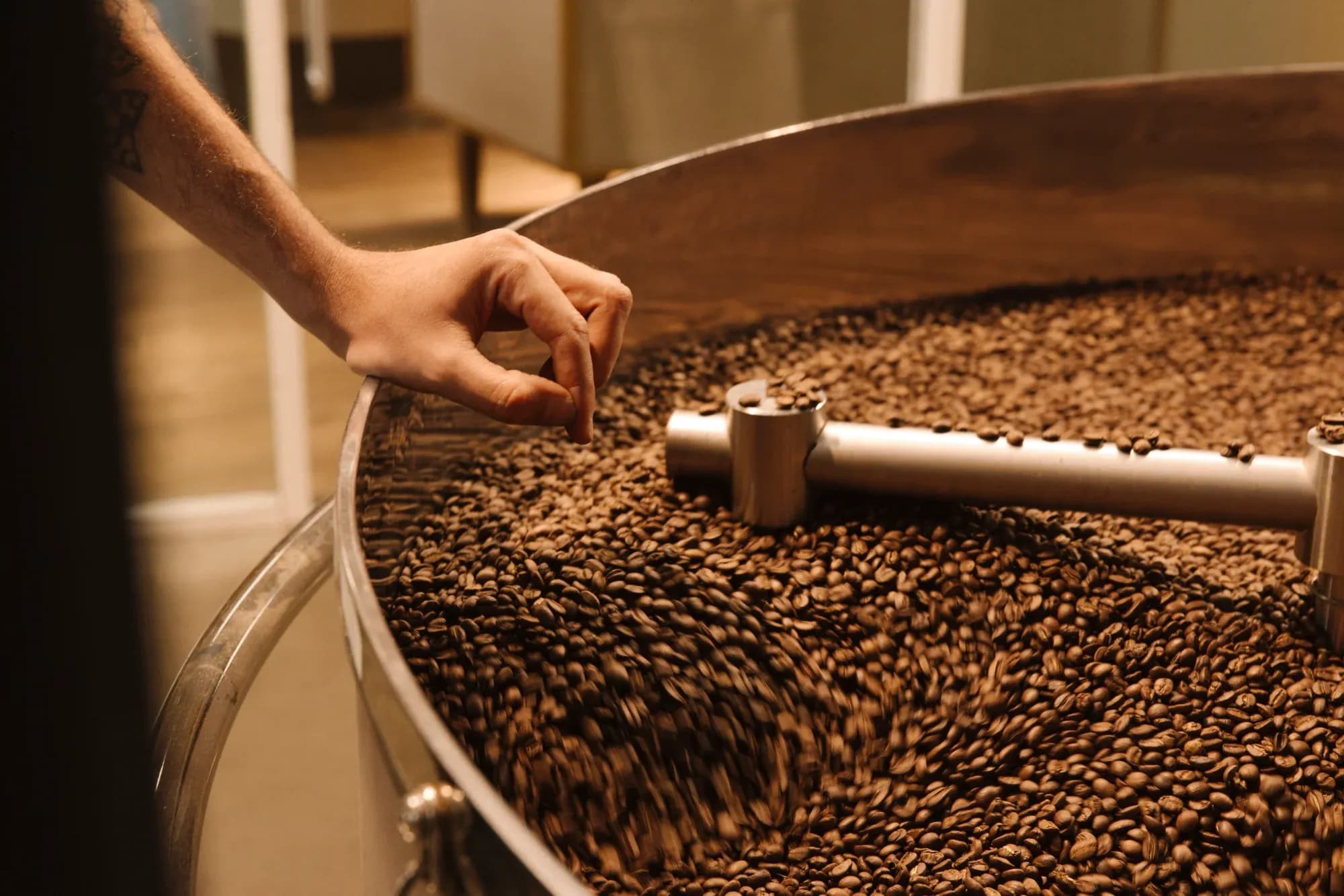
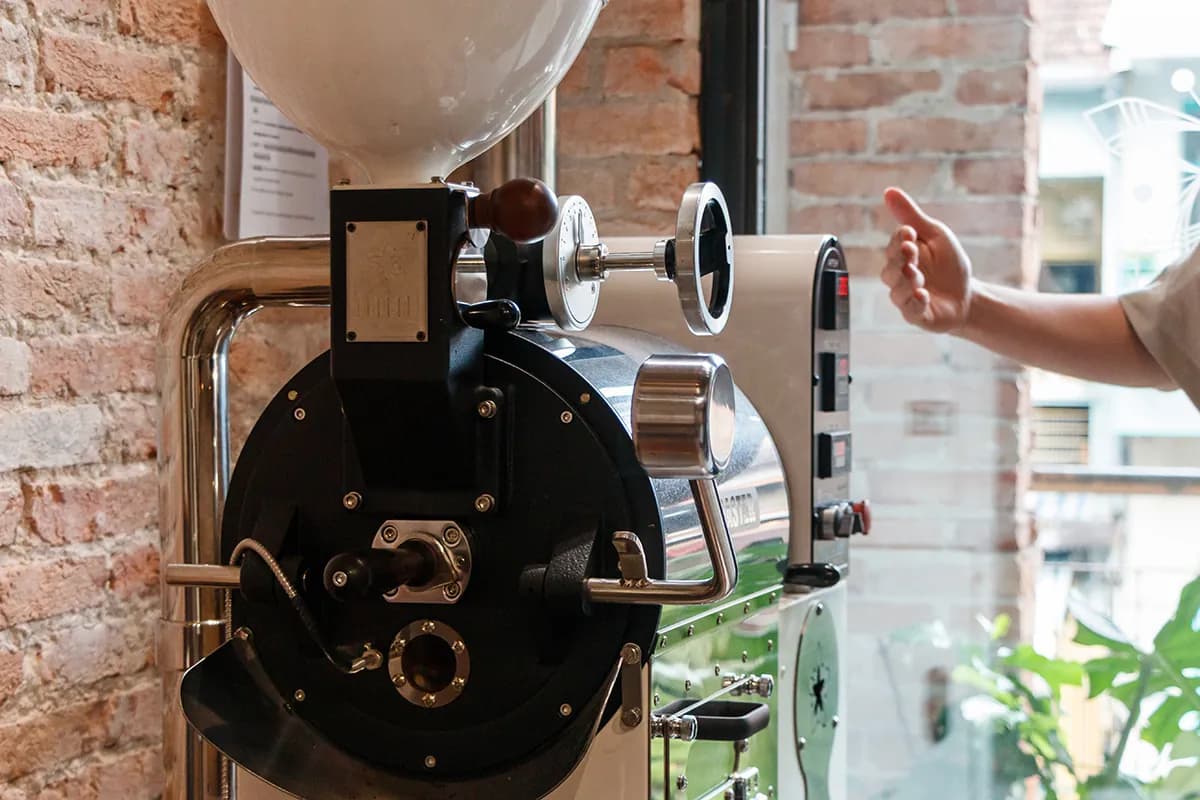
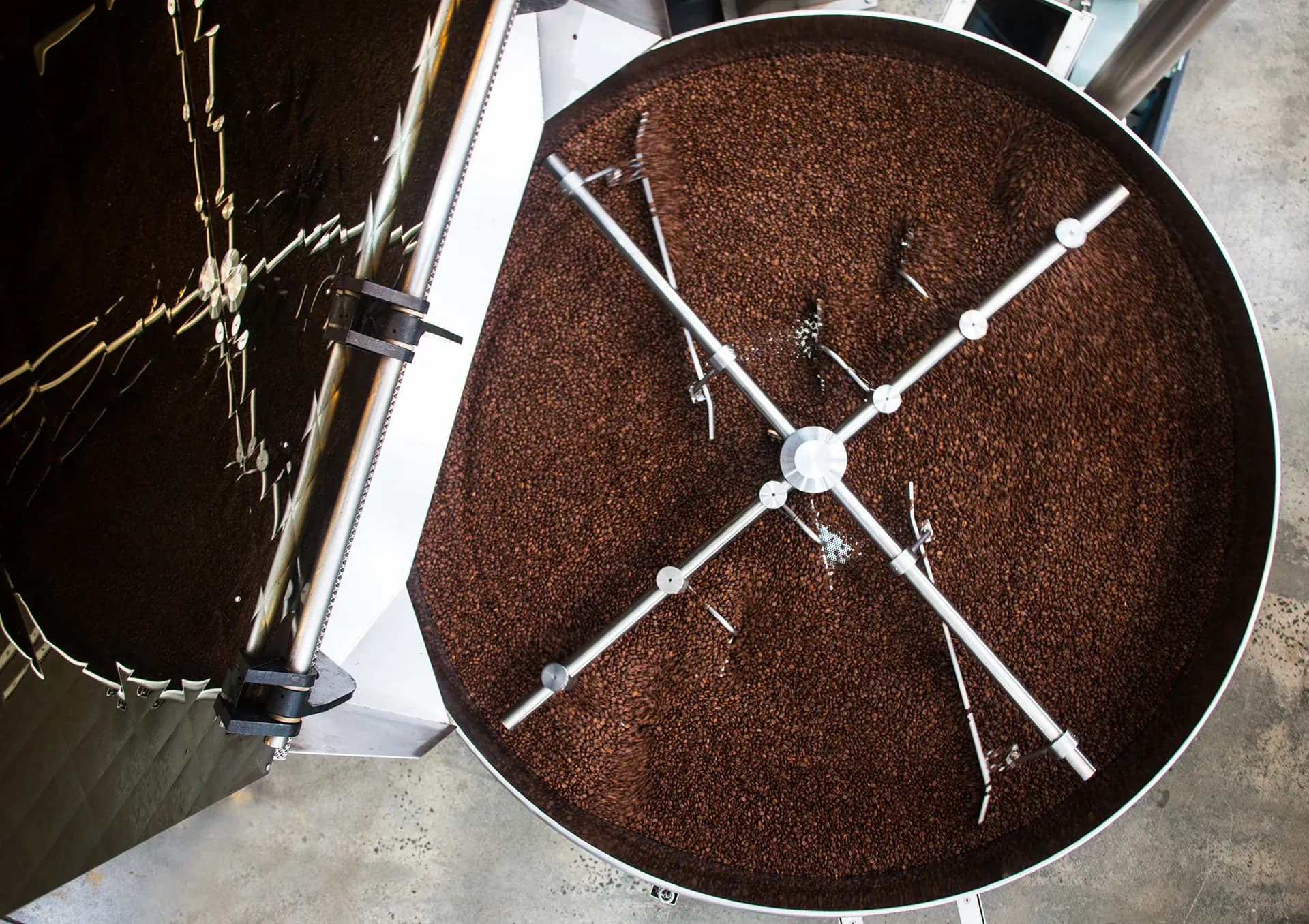
Our partner roastery near the farms takes each batch through drying, yellowing and first crack, then on to the roast each coffee needs: darker for robusta made for the phin, lighter for our arabica. Every batch is cupped before it is packed.
Valve-sealed
Resting and packing
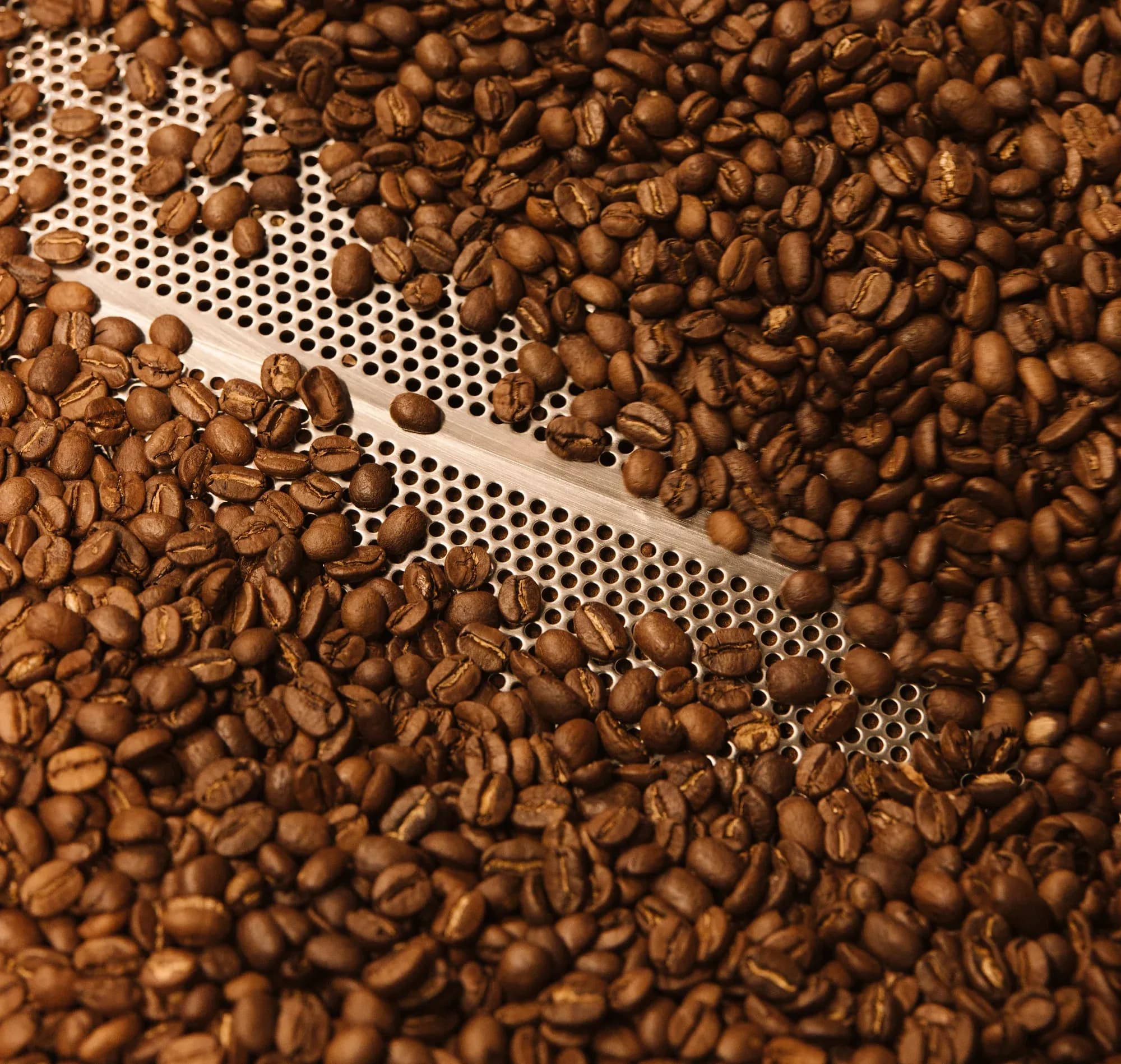
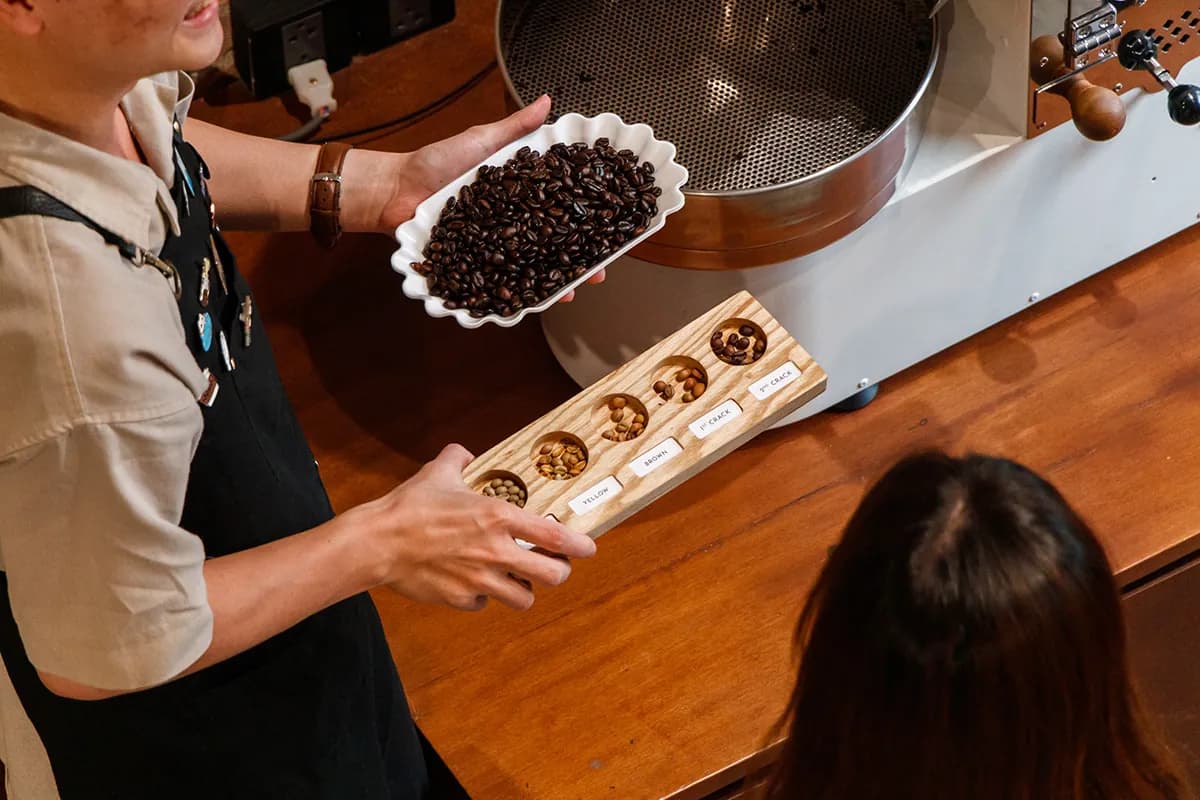
Fresh coffee gives off gas for a few days, so it rests before packing. Then it goes into bags with a one-way valve, printed with the roast date, the origin and the batch.
About 6,900 km
The voyage
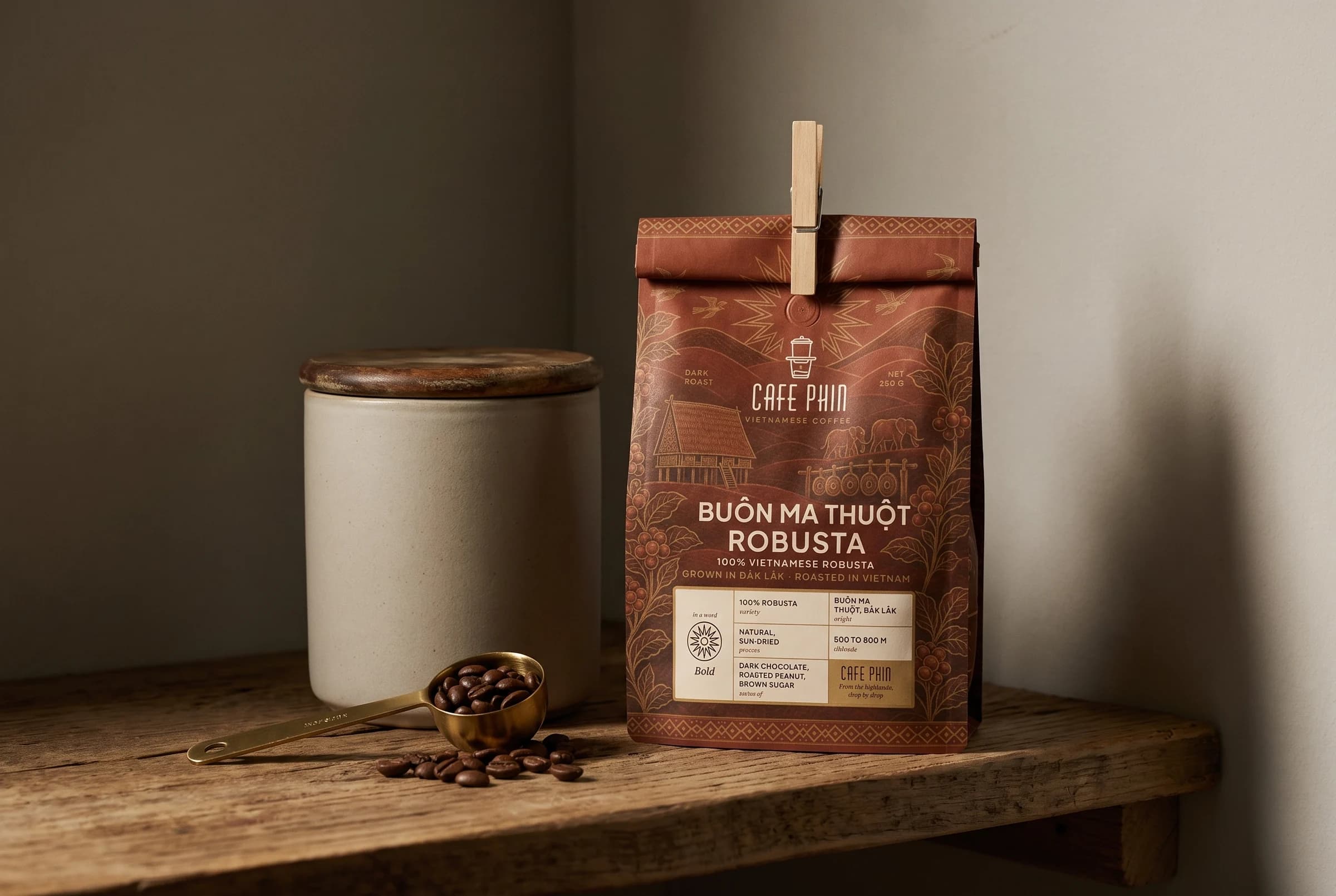
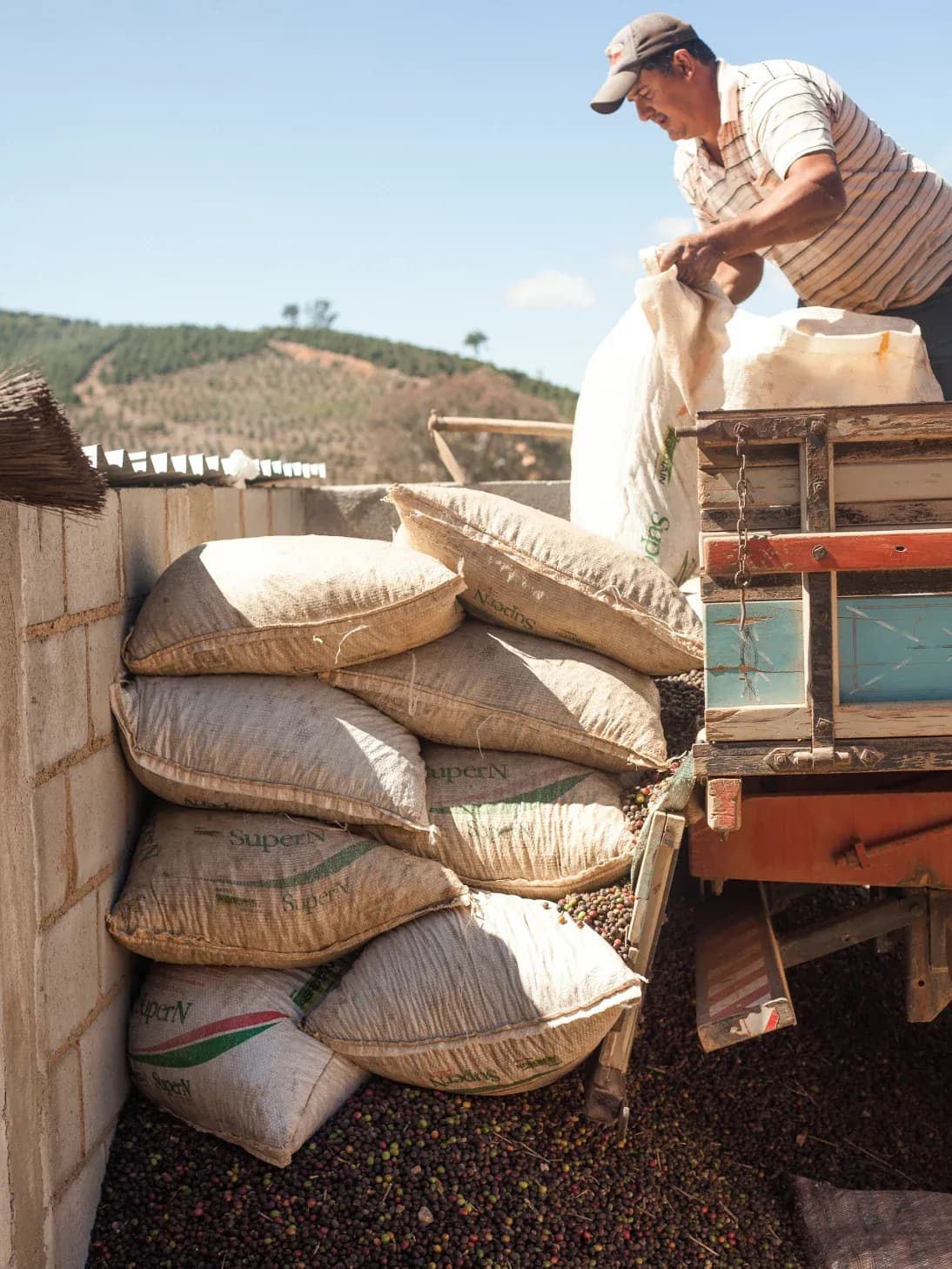
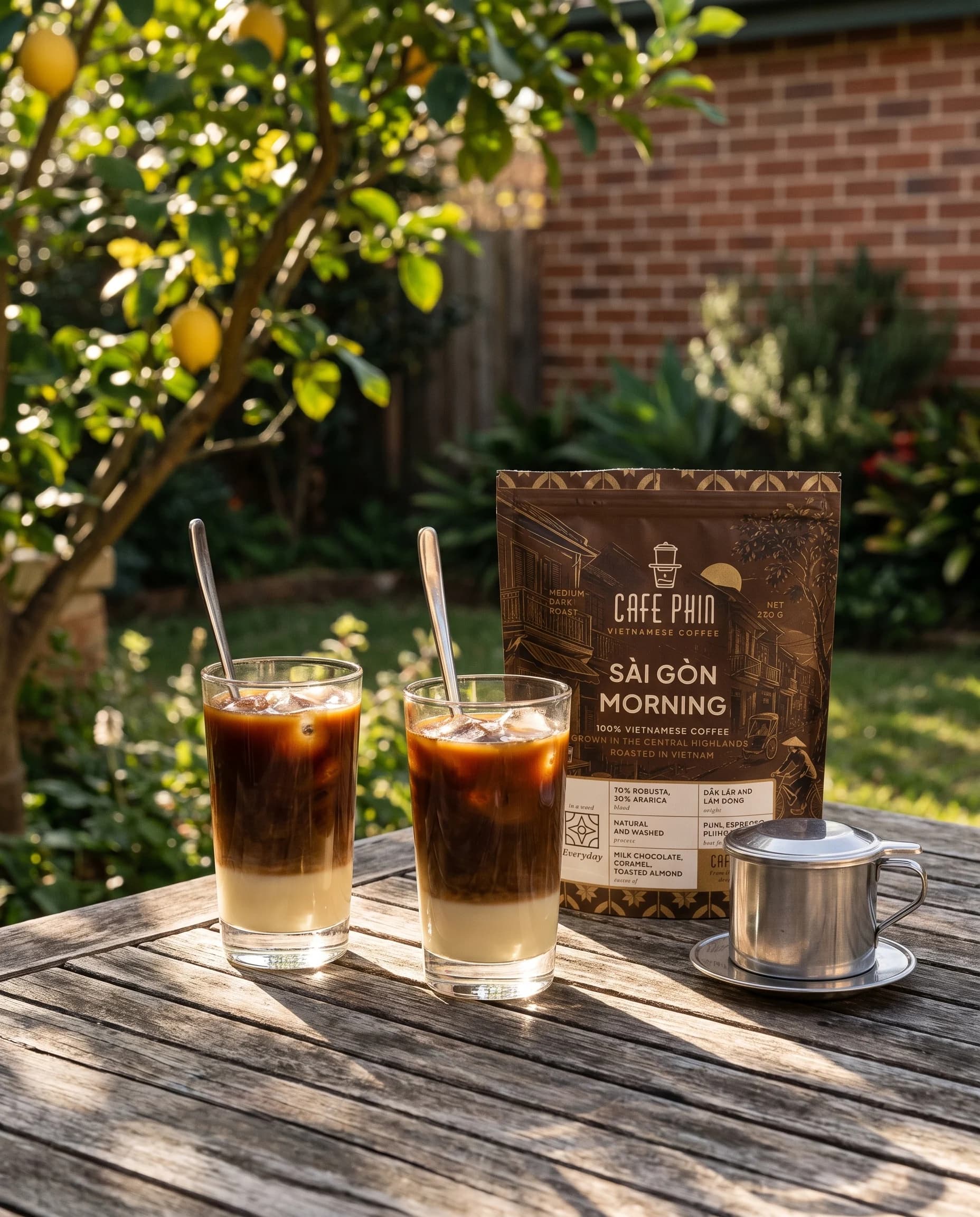
The bags travel from Vietnam to Sydney, where we store them cool and dry and send your order within one business day.
95 °C · 4–5 minutes
Your phin
The last step is yours. Twenty grams of coffee, a splash of water to bloom, then a slow drip onto condensed milk or straight into the cup. Pour it over ice and it's cà phê sữa đá.
Three ways to dry a cherry
Natural
The whole cherry dries in the sun for weeks before the husk comes off.
In the cup: Heavy body, chocolate, dried fruit.
Honey
The skin is pulped off and the bean dries with some sticky fruit still on.
In the cup: Sweet and rounded, syrupy.
Washed
The fruit is pulped, fermented and washed off before the beans dry.
In the cup: Clean and bright; our arabica's method.
Checked at every step
- Ripe-only picking agreed with every farm
- Green beans checked for moisture (10–12 %) and defects
- Graded by screen size, then hand-sorted
- Every roast batch cupped before packing
- Rested, then valve-sealed with the roast date and batch
On every bag, and on this site
- Region
- Altitude
- Variety
- Process
- Harvest
- Roast date
- Batch